🌿 Natural Health
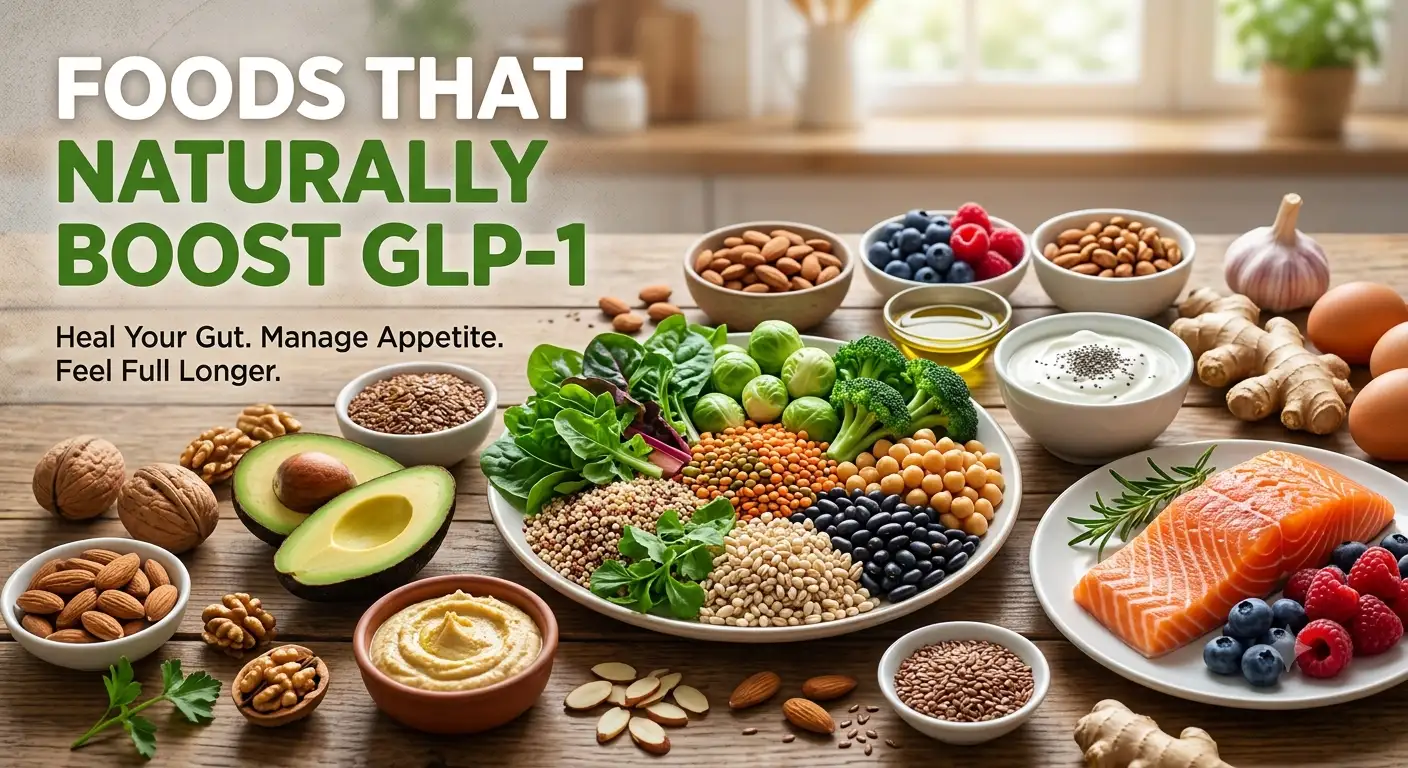
Foods That Naturally Boost GLP-1 — The Science-Backed Guide for Women
📅 Published May 2026
✍️ womenshealthy.org Editorial Team
⏱ 9 min read
✅ Reviewed by a Registered Dietitian
GLP-1 — glucagon-like peptide-1 — is a hormone your body already produces every time you eat. It signals fullness to your brain, slows digestion, stimulates insulin release, and helps regulate blood sugar. It is the same hormone that pharmaceutical drugs like Ozempic and Wegovy are designed to mimic at much higher concentrations.
But here is what most people do not know: certain foods, eating patterns, and lifestyle choices have been shown in peer-reviewed research to meaningfully increase your body’s own natural GLP-1 secretion. While food will never replicate the pharmacological strength of a prescription drug, understanding which foods naturally activate the GLP-1 pathway gives you a powerful, accessible tool for managing appetite, blood sugar, and metabolic health — whether or not you are on medication.
This guide explains exactly which foods stimulate GLP-1, how each one works mechanistically, and how to combine them strategically in your daily diet for the best results.
⚡ Key Answer
Foods that naturally boost GLP-1 include those high in protein (eggs, fish, Greek yogurt), soluble fiber (oats, legumes, avocado), and monounsaturated fats (olive oil, avocado). Polyphenol-rich foods (pomegranate, blueberries, dark chocolate) boost GLP-1 indirectly by feeding Akkermansia muciniphila — the gut bacterium most directly linked to GLP-1 receptor sensitivity. Berberine, found in supplement form from plants like barberry, stimulates GLP-1 secretion through the same intestinal pathways as medication.
What Is GLP-1 and Why Does It Matter for Women’s Health?
GLP-1 is produced by specialized cells in your small intestine and colon called L-cells. Within minutes of eating, these L-cells detect nutrients and release GLP-1 into the bloodstream, where it carries out several critical functions simultaneously:
- Signals the pancreas to release insulin in proportion to how much glucose is present
- Suppresses glucagon — the hormone that raises blood sugar between meals
- Slows gastric emptying, so food moves through your system more gradually and you feel full longer
- Travels to the brain’s hypothalamus, where it reduces appetite and food-seeking behavior
- Protects pancreatic beta cells from damage over time
For women specifically, GLP-1 levels are influenced by hormonal fluctuations across the menstrual cycle and drop significantly during perimenopause — one reason why appetite regulation and blood sugar balance become harder to maintain in midlife. Research also shows that women with polycystic ovary syndrome (PCOS) tend to have impaired GLP-1 responses, contributing to insulin resistance and weight gain.
59
Picograms per millilitre — the peak GLP-1 level measured in studies of the Mediterranean diet, which is one of the most extensively researched dietary patterns for natural GLP-1 elevation. By comparison, the lowest therapeutic dose of semaglutide (Ozempic) produces drug levels of 65
nanograms per millilitre — approximately 1,000 times higher. Food raises GLP-1 meaningfully, but not at pharmaceutical scale.
Source: The Conversation · Dr. Sylvain Meloche, University of Montreal, January 2026
This does not mean dietary GLP-1 stimulation is trivial. Research consistently shows that people who eat diets naturally high in GLP-1-stimulating foods have better insulin sensitivity, lower post-meal glucose spikes, stronger satiety signals, and more stable body weight over time — all through this same hormonal pathway.
How Food Triggers GLP-1 — The Mechanism Explained Simply
Understanding the three main pathways by which food activates L-cells makes it much easier to choose foods strategically rather than following a generic healthy eating list.
Pathway 1Direct nutrient sensing — protein, fat, and specific fibers contact L-cell receptors directly and trigger immediate GLP-1 release within 15–30 minutes of eating.
→
Pathway 2Short-chain fatty acids (SCFAs) — gut bacteria ferment soluble fiber and resistant starch into butyrate, propionate, and acetate, which bind to L-cell receptors in the lower gut.
→
Pathway 3Microbiome modulation — polyphenols and prebiotics enrich Akkermansia muciniphila and SCFA-producing bacteria, amplifying GLP-1 signals over weeks of consistent eating.
The first pathway is fast but short-lived. The second and third pathways are slower but produce more sustained, lasting improvements in GLP-1 baseline secretion. A diet that combines all three is significantly more effective than one targeting only a single pathway.
The 9 Best Foods That Naturally Boost GLP-1
🥚
Eggs
Both egg whites and whole eggs directly stimulate GLP-1 secretion. A 2016 research review found that a three-egg breakfast produced significantly lower post-meal blood glucose, reduced hunger, and decreased food intake over the next 24 hours compared to a bagel breakfast of equal calories. Egg whites are particularly potent for GLP-1 via their amino acid profile.
Protein pathway
🐟
Fatty Fish (Salmon, Sardines, Mackerel)
Wild-caught fatty fish stimulate GLP-1 through two mechanisms simultaneously: high-quality protein activates L-cells directly via amino acid sensing, and omega-3 fatty acids (DHA and EPA) activate free fatty acid receptors on L-cells to prolong GLP-1 activity. Research also shows omega-3s support Akkermansia muciniphila growth in the gut microbiome.
Protein + fat pathway
🫙
Greek Yogurt and Kefir
Fermented dairy products contribute to GLP-1 elevation through three pathways at once: whey protein directly triggers L-cell secretion; calcium found in dairy has been shown to stimulate GLP-1 in combination with protein; and live bacterial cultures in kefir and full-fat yogurt improve gut microbiome diversity, supporting SCFA production and Akkermansia growth.
Gut + protein pathway
🥣
Oats and Barley (Beta-Glucan)
Oats and barley are among the richest natural sources of beta-glucan, a soluble fiber that forms a viscous gel in the gut. This gel slows carbohydrate absorption, reducing glucose spikes and triggering gradual GLP-1 release. Beta-glucan also serves as a prebiotic substrate for SCFA-producing bacteria. A randomized trial found that 4 g of oat beta-glucan daily meaningfully improved post-meal insulin response and appetite control.
Fiber + SCFA pathway
🥑
Avocado
A 2019 controlled study found that eating a whole avocado with a meal significantly increased both GLP-1 and peptide YY (another satiety hormone), while simultaneously reducing insulin levels compared to a control meal. This effect comes from the unique combination of soluble fiber and monounsaturated fats working together — a combination that Food Navigator research identifies as particularly effective for GLP-1 production, more so than either nutrient alone.
Fiber + fat pathway
🫘
Legumes (Lentils, Chickpeas, Black Beans)
Legumes are uniquely positioned as GLP-1 boosters because they combine three active properties: moderate protein content activates L-cells directly; high soluble fiber slows gastric emptying and feeds SCFA-producing gut bacteria; and resistant starch content (especially in cooked-and-cooled beans) further amplifies SCFA production in the lower colon, where a second wave of GLP-1 secretion occurs hours after eating.
Protein + fiber + resistant starch
🫐
Blueberries, Pomegranate and Dark Berries
Polyphenol-rich fruits do not trigger GLP-1 directly — but they are among the most powerful indirect boosters available through the microbiome pathway. Pomegranate, blueberries, cranberries, and grapes contain ellagitannins, anthocyanins, and resveratrol that selectively enrich Akkermansia muciniphila in the gut. U.S. News and the Journal of Endocrinology and Metabolism both identify this Akkermansia-GLP-1 connection as a primary mechanism for polyphenol-driven metabolic benefits.
Polyphenol → Akkermansia → GLP-1
🫒
Extra-Virgin Olive Oil
A 2021 research review confirmed that unsaturated fats like those in extra-virgin olive oil are significantly more effective at stimulating GLP-1 release from L-cells than saturated fats. Olive oil’s oleic acid activates free fatty acid receptors (GPR40 and GPR120) on L-cells in the small intestine, triggering rapid GLP-1 release. The polyphenols in high-quality extra-virgin olive oil also support the gut microbiome environment linked to sustained GLP-1 production.
Fat + polyphenol pathway
🧅
Garlic, Onions, Leeks and Jerusalem Artichokes
These vegetables are rich in inulin and fructan — two prebiotic fibers that gut bacteria ferment into butyrate and propionate, both of which directly stimulate L-cell GLP-1 secretion through the SCFA pathway. Regular consumption supports Akkermansia muciniphila growth and increases microbial diversity — both independently associated with higher baseline GLP-1 secretion over time. Jerusalem artichokes have the highest inulin density of any whole food.
Prebiotic → SCFA → GLP-1
The Akkermansia Connection: Why Gut Health Is Central to GLP-1
One of the most important and underappreciated findings in GLP-1 research is the role of a single gut bacterium: Akkermansia muciniphila. This organism lives in the mucus layer of the gut and is directly linked to both natural GLP-1 secretion and GLP-1 receptor sensitivity — the ability of your cells to respond to GLP-1 signals when they arrive.
Research from 2023 and 2024 shows that when microbes — including Akkermansia — ferment dietary fibers, they produce short-chain fatty acids (SCFAs) like acetate, propionate, and butyrate. These SCFAs then activate FFAR2 and FFAR3 receptors on intestinal L-cells, prompting a fresh wave of GLP-1 release in the lower gut, hours after the original meal. This is why high-fiber diets are consistently associated with greater satiety and more stable blood sugar — the GLP-1 response is extended and amplified through this bacterial pathway.
🔬 Science Note
You cannot eat Akkermansia directly from food — it is an anaerobic bacterium that lives inside your gut’s mucus layer, not in fermented foods like kimchi or kefir. However, you can dramatically support its growth by consuming polyphenol-rich foods (pomegranate, blueberries, green tea, cranberries, dark chocolate) and prebiotic fiber sources (garlic, onions, oats, asparagus, legumes). Both are confirmed as Akkermansia-enriching dietary strategies in multiple peer-reviewed studies.
Berberine: The Plant Compound That Activates GLP-1 Through the Same Pathway as Medication
Berberine is a natural isoquinoline alkaloid found in plants including barberry, goldenseal, and Oregon grape. Of all dietary compounds studied for GLP-1 effects, berberine has the most direct and mechanistically clear evidence — and a 2025 paper published in Frontiers in Pharmacology describes the pathway in detail.
Berberine specifically activates the bitter taste receptor TAS2R38 in intestinal enteroendocrine cells, triggering GLP-1 secretion through the phospholipase C (PLC) signaling pathway. It also activates AMPK (AMP-activated protein kinase) in intestinal L-cells, which further enhances GLP-1 secretion. A comprehensive PubMed review concluded that berberine, curcumin, cinnamon, green tea, and resveratrol all meaningfully influence GLP-1 release through food-based mechanisms.
⚠️ Important Perspective
While berberine and food-based strategies do meaningfully elevate natural GLP-1 levels, the clinical magnitude is far smaller than pharmaceutical GLP-1 agonists. Research indicates that the Mediterranean diet can raise GLP-1 to approximately 59 picograms per millilitre — while the lowest dose of semaglutide produces 65 nanograms per millilitre (roughly 1,000 times higher). Food-based GLP-1 elevation is a genuine and valuable tool for metabolic health — but it is not equivalent to medication for people with clinical obesity or type 2 diabetes.
Other herbs and spices with peer-reviewed evidence for GLP-1 modulation include: cinnamon (prevents insulin resistance and supports GLP-1 secretion), curcumin from turmeric (anti-inflammatory and GLP-1 stimulating), and green tea catechins (EGCG supports both GLP-1 secretion and Akkermansia growth).
The Eating Order That Matters: Protein and Vegetables Before Carbohydrates
One of the most powerful and underutilized GLP-1 strategies is simply changing the order in which you eat your food at each meal.
Research published in The Conversation and multiple clinical studies confirms that eating protein or vegetables before carbohydrates at the same meal produces significantly higher post-meal GLP-1 levels compared to eating carbohydrates first. The mechanism is straightforward: when protein or fiber arrives at L-cells first, it primes them for a stronger secretory response to the carbohydrates that follow.
Even the physical form of food matters. One study found that eating shredded whole cabbage raised GLP-1 more than drinking pureed cabbage — solid food that requires chewing and mechanical digestion triggers a stronger GLP-1 signal than the same food in liquid form.
Practical application at every meal: eat your protein first, then vegetables, then grains or starches last. This single habit, applied consistently, produces a measurably higher GLP-1 response from whatever food you are already eating — without changing what is on your plate.
A Sample Day Designed to Naturally Maximize GLP-1
Breakfast
3 scrambled eggs in extra-virgin olive oil + ½ cup plain kefir + rolled oat porridge with blueberries and cinnamon
→ Protein + fat + beta-glucan + polyphenols: three GLP-1 pathways activated simultaneously
Mid-Morning
Green tea (hot or iced) + a small handful of walnuts
→ EGCG catechins support Akkermansia; walnuts provide GLP-1-stimulating unsaturated fat
Lunch
Grilled salmon (eat first) → salad with arugula, pomegranate seeds, avocado, olive oil dressing → ½ cup cooked lentils
→ Protein before carbs maximizes GLP-1 response; avocado + olive oil activate fat pathway; polyphenols feed Akkermansia
Afternoon
Plain Greek yogurt with a small square of dark chocolate (85%+) and a few strawberries
→ Casein protein + cocoa polyphenols + probiotics: gut microbiome + direct L-cell stimulation
Dinner
Chicken thigh (first) → roasted broccoli and asparagus with garlic → cooked-and-cooled sweet potato
→ Protein first strategy; garlic inulin feeds SCFA bacteria; resistant starch in cooled potato for sustained GLP-1
The iHerb Supplement That Combines the Top 4 Natural GLP-1 Compounds
🌿 iHerb Editor’s Pick — Natural GLP-1 Support
California Gold Nutrition GLP-1 Supreme™ — Akkermansia, Dihydroberberine, Quercetin & Curcumin
For women who want to reinforce a GLP-1-supporting diet with targeted supplementation, this formula combines the four most research-backed natural GLP-1 support compounds in a single daily capsule.
Dihydroberberine (DHB) — a more bioavailable form of berberine (up to 5× better absorbed), it directly activates the TAS2R38 bitter receptor and AMPK pathway in intestinal L-cells to stimulate GLP-1 secretion — the same cellular pathway described in the research cited in this article.
Akkermansia muciniphila (pasteurized) — the gut bacterium most directly linked to GLP-1 receptor sensitivity and gut barrier integrity. The pasteurized form retains bioactivity while remaining shelf-stable.
Quercetin dihydrate — a plant polyphenol shown to reduce metabolic inflammation and support insulin signaling; from Fava d’Anta extract.
Amorphous curcumin — the most bioavailable form of curcumin (27% curcuminoid complex), with research supporting both anti-inflammatory and GLP-1 modulatory effects.
Also includes chromium picolinate (blood sugar support) and cinnamon extract (standardized to 3% type-A polymers). Rated 4.3/5 across 320+ verified iHerb reviews. Third-party tested (iTested). Non-GMO, gluten-free, soy-free.
Dihydroberberine (DHB)
Akkermansia muciniphila
Quercetin + Curcumin
iTested — 3rd party verified
View on iHerb →
Frequently Asked Questions
What foods most effectively boost GLP-1 naturally?
▾
The foods with the strongest evidence for naturally boosting GLP-1 are: eggs and egg whites (direct L-cell stimulation via protein), avocados (fiber plus monounsaturated fat combination proven to raise GLP-1 and peptide YY in a 2019 controlled study), oats and barley (beta-glucan fiber activates the SCFA pathway), fatty fish like salmon and sardines (protein plus omega-3 free fatty acid receptor activation), and polyphenol-rich foods like pomegranate and blueberries (feed Akkermansia muciniphila, which indirectly amplifies GLP-1 secretion). Eating protein before carbohydrates at each meal also significantly increases GLP-1 response without changing the foods themselves.
Can food raise GLP-1 as much as Ozempic or Wegovy?
▾
No — not even close in terms of the hormone concentration produced. Research shows that the Mediterranean diet can raise GLP-1 to approximately 59 picograms per millilitre, while the lowest dose of semaglutide (Ozempic) produces drug levels around 65 nanograms per millilitre — roughly 1,000 times higher. Food-based GLP-1 elevation is real, measurable, and clinically meaningful for metabolic health and appetite regulation — but it does not replicate the pharmacological effect of GLP-1 medications for people with clinical obesity or type 2 diabetes. The two approaches are complementary, not interchangeable.
Does berberine actually boost GLP-1?
▾
Yes — with meaningful caveats. Multiple peer-reviewed studies, including a 2025 paper in Frontiers in Pharmacology, confirm that berberine stimulates GLP-1 secretion by activating the bitter taste receptor TAS2R38 in intestinal L-cells and by activating the AMPK pathway. A comprehensive PubMed review also lists berberine alongside curcumin, cinnamon, tea, and resveratrol as natural compounds that influence GLP-1 release. However, berberine does not directly bind to GLP-1 receptors the way pharmaceutical drugs do — its effect is indirect and more modest. Dihydroberberine (DHB), a more bioavailable form available as a supplement, produces stronger effects at lower doses.
What role does the gut microbiome play in GLP-1 production?
▾
The gut microbiome plays a central role in sustained, long-term GLP-1 production through two main mechanisms. First, when bacteria ferment soluble fiber and resistant starch, they produce short-chain fatty acids (SCFAs) like butyrate, propionate, and acetate, which bind to receptors on L-cells in the lower gut and trigger a second wave of GLP-1 secretion hours after eating. Second, Akkermansia muciniphila specifically strengthens gut barrier integrity and is directly associated with improved GLP-1 receptor sensitivity. Supporting your gut microbiome through polyphenol-rich foods, prebiotic fibers, and fermented foods produces lasting improvements in GLP-1 baseline secretion over weeks and months of consistent eating.
Does eating order really affect GLP-1 levels?
▾
Yes — and this is one of the most practically significant GLP-1 findings for everyday eating. Research confirms that eating protein or vegetables before carbohydrates at the same meal produces significantly higher post-meal GLP-1 levels than eating carbohydrates first. This is because protein and fiber arriving at intestinal L-cells first primes them for a stronger secretory response. Simply rearranging the order of what you already eat — protein first, then vegetables, then starches last — produces a measurably better GLP-1 and blood sugar response without changing the food itself at all.
Are there lifestyle factors beyond food that raise GLP-1 naturally?
▾
Yes. Exercise — particularly both high-intensity and moderate-intensity aerobic training — has been shown to raise GLP-1 levels during and after activity. Sleep quality is also directly linked to GLP-1 secretion: poor sleep disrupts the hormonal environment that GLP-1 operates in, reducing its effectiveness even when diet is optimal. Chronic stress elevates cortisol, which impairs GLP-1 receptor signaling. Dietary diversity — eating a wide variety of plant foods to maintain a resilient, diverse gut microbiome — is also consistently identified by microbiologists as a key long-term factor in maintaining strong natural GLP-1 production.
📚 Trusted Sources & Further Reading
- Meloche S. (2026). What and how you eat can increase GLP-1 without drugs. The Conversation. theconversation.com
- GoodRx Health. (2025). 9 Foods and Supplements That Increase GLP-1 Naturally. goodrx.com
- Healthline. (2025). 6 Foods That Increase GLP-1 Levels. healthline.com
- U.S. News Health. (2026). 19-Plus Foods and Drinks That Mimic Ozempic: Natural GLP-1 Boosters. health.usnews.com
- Wu W. et al. (2023). Berberine enhances islet β cell function through GLP-1/GLP-1R/PKA signaling in intestinal L-cells. Frontiers in Pharmacology. ncbi.nlm.nih.gov
- PubMed Review. (2022). Boosting GLP-1 by Natural Products — Berberine, curcumin, cinnamon, resveratrol. pubmed.ncbi.nlm.nih.gov
- Food Navigator. (2025). 4 Natural Food Ingredients That Boost GLP-1 — Protein, Fiber, Monounsaturated Fats, Polyphenols. foodnavigator.com
- Tiny Health. (2026). GLP-1 and Weight Loss: How to Increase GLP-1 Naturally. tinyhealth.com
- Moderately Messy RD. (2025). How to Increase GLP-1 Without Medication — Grocery List Included. moderatelymessyrd.com
- National Institutes of Health. GLP-1 receptor agonists and endogenous hormone regulation. ncbi.nlm.nih.gov